 Education
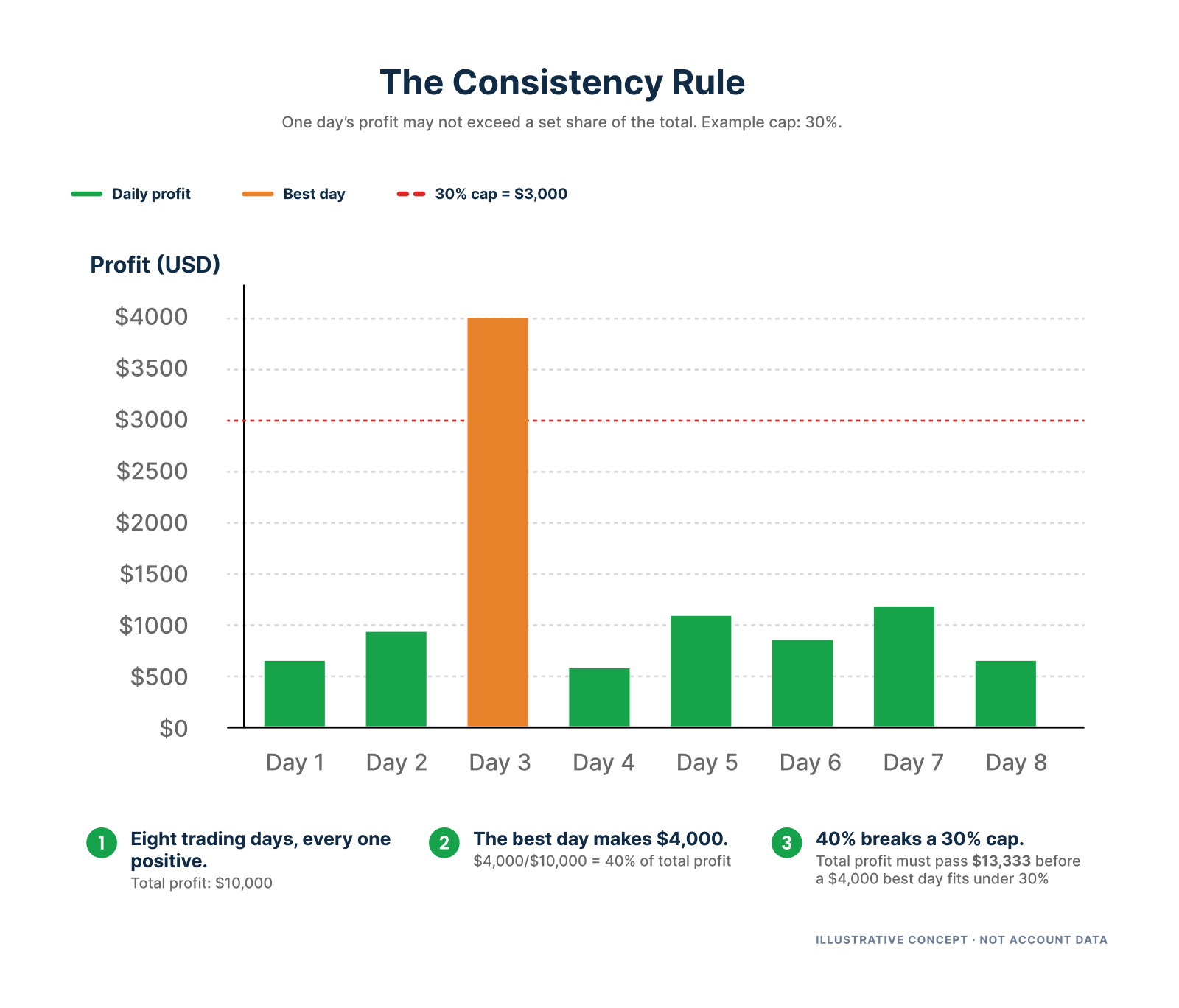
 Consistency Rule Prop Firm: How It Works
What a prop firm consistency rule is, how it is calculated, what the 20%, 30% and 40% versions mean, which firms have none, and how to pass one.
22 Jul 2026 6 min read

Prop firm evaluations are not standardised. Each firm sets its own drawdown rules, profit targets, consistency requirements and payout structures. Two firms may use the same phrase and define it differently. These pages explain the rules that trip traders up before you pay for a challenge. Every rule value quoted across the site is taken from the firm's own published terms, verified and dated.
This library is for anyone researching a prop firm, whether you are completely new to the model or you have already failed an evaluation and want to understand why. It covers the fundamentals, walks through the rule pages that cause the most failures, and connects the concepts to the firm reviews and scores on the rest of the site.

Written by Noam Korbl · Fact-checked by Justin Grossbard
Last updated
Suggested Order
Work through these in order, or jump to whatever you need.
What prop trading is, whether it suits you, and how the model works.
What is a Prop Trading Firm? A Complete Guide for 2026
A prop trading firm lets you trade its simulated capital after a paid evaluation, keeping 80-100% of profits with risk capped at the fee. The full model explained.
Prop Trading for Beginners: How It Works & Tips
Prop trading for beginners without the hype: what a challenge sells you, the five ways first attempts fail, and how to start from a $5 entry.
Pros and Cons of Prop Trading
The honest prop trading trade: large simulated capital and downside capped at the fee, in exchange for rules, compounding fees and no ownership. Both sides.
Evaluation structures, account types, and how the money reaches you.
Prop Trading Account Types: Evaluation Models Explained
Every prop account model with recorded numbers: two-step standards, one-step trailing rules, session products, instant funding trade-offs and add-on cost math.
How Prop Firms Pay You: Payouts Explained
Prop firm payouts by the numbers: splits of 80-100%, cycles from day-one on-demand to monthly, processing from 8 hours, and the caps the headlines skip.
Drawdown, daily loss and consistency - the conditions that end most challenges.
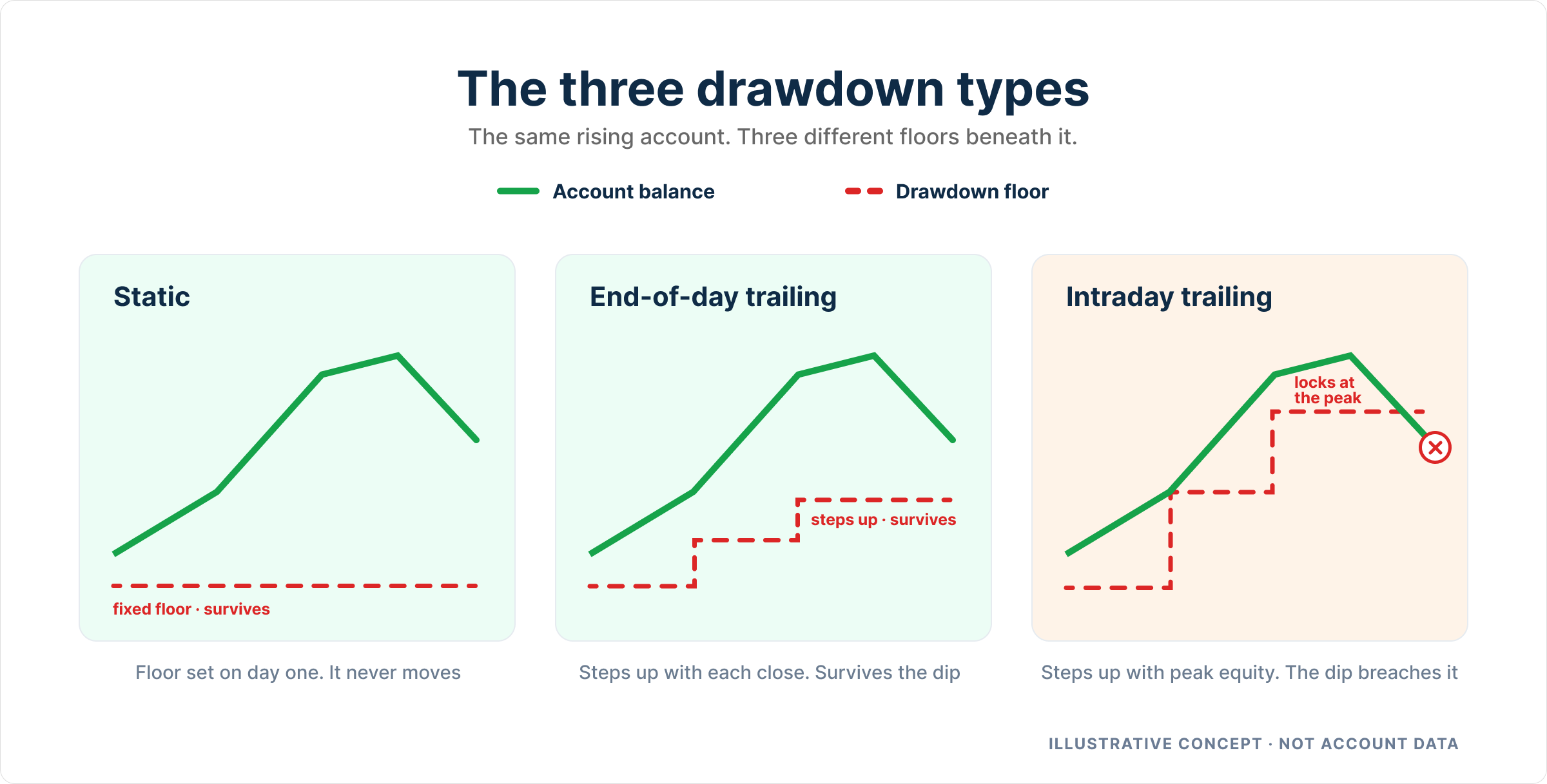
Prop Firm Drawdown Types: Static vs Trailing Explained
Static, end-of-day trailing and intraday trailing drawdown explained, with worked examples showing how each type decides whether an account breaches.
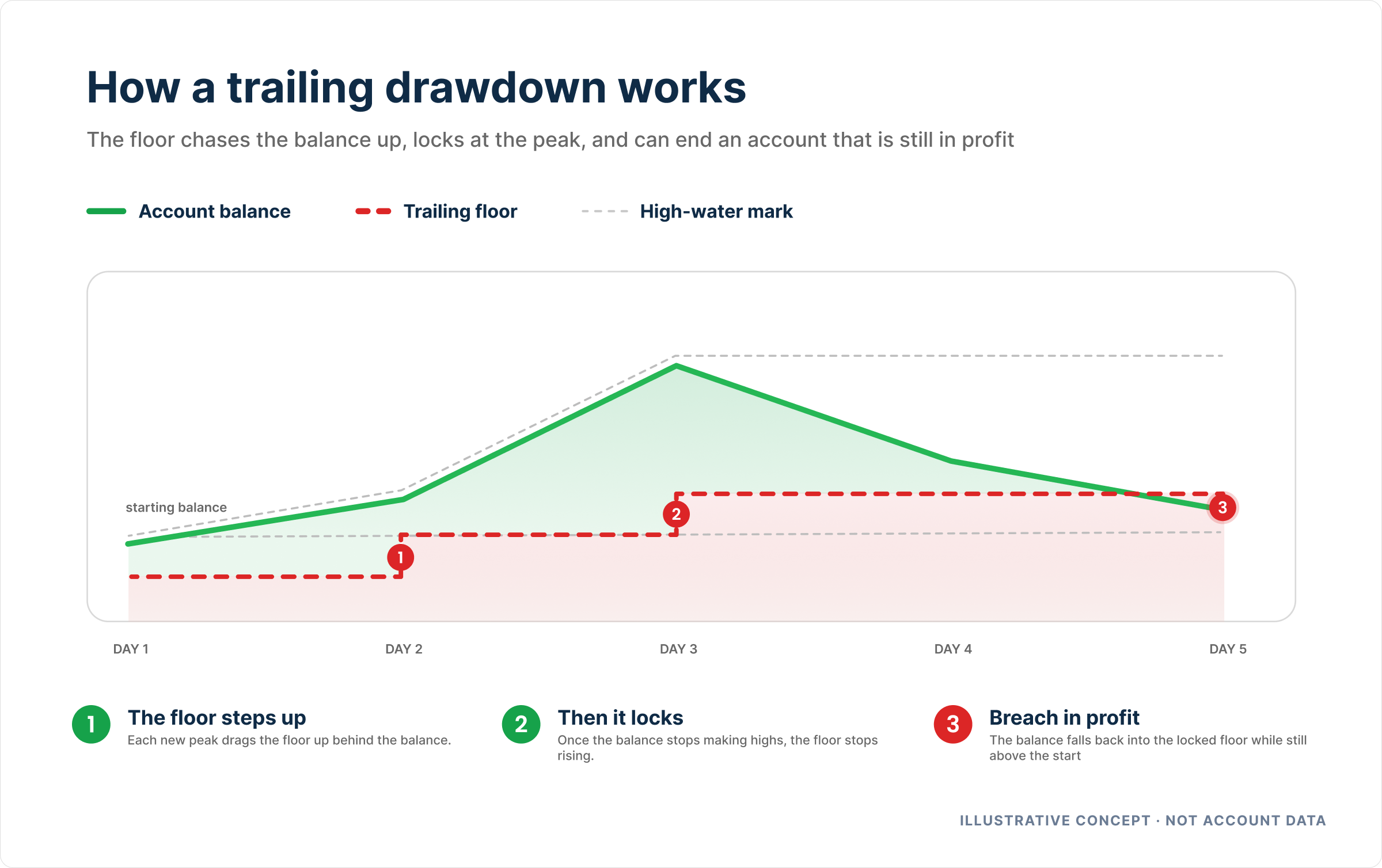
Trailing Drawdown Explained: How It Works
How trailing drawdown works, when it stops trailing, and how it breaches accounts that are still in profit, with worked examples of the high-water-mark ratchet.
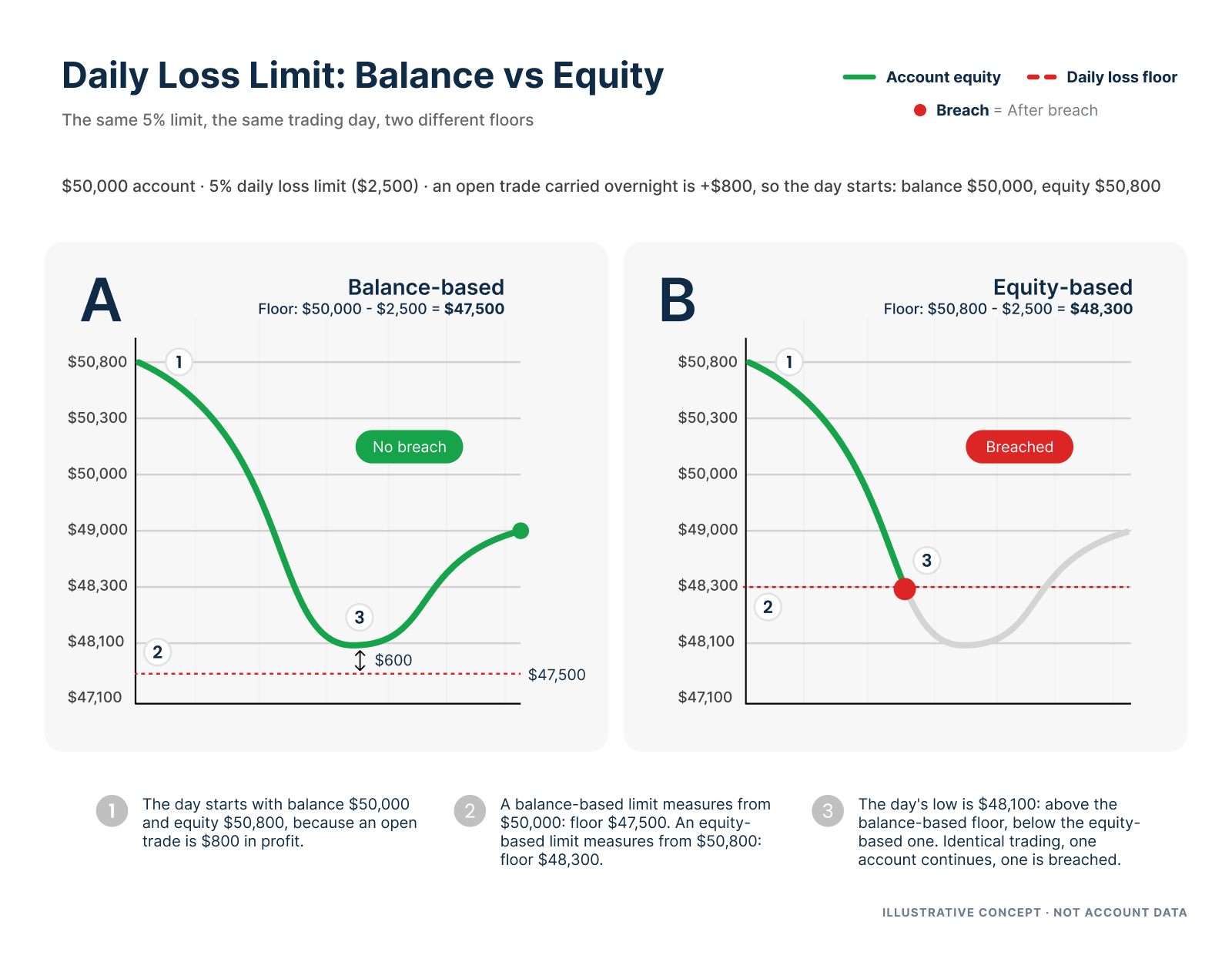
Daily Loss Limit Prop Firm: How It Works
What a prop firm daily loss limit is, how it is calculated, whether it uses balance or equity, which firms have none, and how to avoid breaching it.
Consistency Rule Prop Firm: How It Works
What a prop firm consistency rule is, how it is calculated, what the 20%, 30% and 40% versions mean, which firms have none, and how to pass one.
The strategy and risk discipline that decide whether you stay funded.
Prop Trading Strategies That Work Inside the Rules
Prop strategy is ordinary strategy inside drawdown, consistency and news rules. What fits, what breaches accounts, and the sizing arithmetic that is the edge.
Risk Management for Prop Traders
Risk management at a prop firm means trading inside enforced rules: sizing against daily limits, drawdown types, correlation traps and the psychology tested.
Read These First
The profit target gets the attention, but the rules that limit losses are the ones that end most evaluations. Drawdown rules are the most common reason traders fail a challenge. The terms static drawdown, trailing drawdown, daily loss limit and consistency rule appear in almost every firm's terms, but the definitions vary. One firm's trailing drawdown might lock at the starting balance; another's might trail every closed trade. A daily loss limit could be 4 percent of the starting equity, 5 percent of the current balance, or something else. The consistency rule may require your best day not to exceed a certain percentage of total profit, or it may apply a different calculation. The education pages on drawdown types, trailing drawdown, daily loss limit and the consistency rule explain each mechanism in plain terms. They show how the numbers work in practice, so you can compare firms before you buy a challenge. Understanding these rules is not optional. If you misread a trailing drawdown as static, you will likely breach the account without realising why. These pages are the difference between an informed attempt and a costly mistake.
All Articles
Education What a prop firm consistency rule is, how it is calculated, what the 20%, 30% and 40% versions mean, which firms have none, and how to pass one.
 Education
 What a prop firm daily loss limit is, how it is calculated, whether it uses balance or equity, which firms have none, and how to avoid breaching it.
 Education
 Static, end-of-day trailing and intraday trailing drawdown explained, with worked examples showing how each type decides whether an account breaches.
 Education
 How trailing drawdown works, when it stops trailing, and how it breaches accounts that are still in profit, with worked examples of the high-water-mark ratchet.
 Education
 Crypto prop trading explained: simulated accounts, 1:1-2:1 leverage caps, weekend rules that differ by firm, and payouts of 80-100%. How it works and how to choose.
 Education
 Forex prop trading explained: entry fees from $5, recorded leverage of 1:15-1:100, commissions from $4 round-turn, and splits of 80-100%. The complete guide.
 Education
 Prop strategy is ordinary strategy inside drawdown, consistency and news rules. What fits, what breaches accounts, and the sizing arithmetic that is the edge.
 Education
 Prop firm payouts by the numbers: splits of 80-100%, cycles from day-one on-demand to monthly, processing from 8 hours, and the caps the headlines skip.
 Education
 Prop scaling plans with the fine print: recorded ceilings of $2M-$4M, milestone mechanics, the two real salary programmes, and the caps that fight compounding.
 Education
 How prop firms really make money: challenge fees, resets and add-ons fund the pool, platform fees add margin, and broker-backed firms hedge their winners.
 Education
 Prop firm evaluations decoded: the recorded targets and drawdowns, the rules that fail more traders than targets, and a pass plan that respects the maths.
 Education
 The prop challenge machine end to end: purchase to funded, recorded targets and phases, breach mechanics, verification, and what failure actually costs.
 Education
 Every prop account model with recorded numbers: two-step standards, one-step trailing rules, session products, instant funding trade-offs and add-on cost math.
 Education
 Prop trading for beginners without the hype: what a challenge sells you, the five ways first attempts fail, and how to start from a $5 entry.
 Education
 The honest prop trading trade: large simulated capital and downside capped at the fee, in exchange for rules, compounding fees and no ownership. Both sides.
 Education
 Risk management at a prop firm means trading inside enforced rules: sizing against daily limits, drawdown types, correlation traps and the psychology tested.
 Education
 A prop trading firm lets you trade its simulated capital after a paid evaluation, keeping 80-100% of profits with risk capped at the fee. The full model explained.
Reading is one half of it. The Discord is where traders working through the same evaluations compare notes, share what tripped them up, and answer the specific questions an article can't anticipate. Free to join.
traders learning together right now
Join DiscordCommon Questions
Short answers to what beginners ask most.
Know the Basics?
Once you understand the rules and how payouts work, the next step is to compare firms using the data on the rest of the site. The firm rankings list all 39 firms by score, weighted across the seven criteria. The methodology page explains how each score is calculated so you can see what goes into the number. Before you pay for a challenge, check the discount codes page for current offers that can lower the cost. These three steps turn the education into a practical choice.